Emergency Lockouts · Norfolk County
Broken Key Extraction
The key went in like any other morning, you turned it, and something gave with a small metallic click. The bow is still between your fingers.
Call now · open 24/7(226) 641-0178In plain words
Keys break for a reason, and finding that reason is half the visit. A brass key wears thinnest at its deepest cut, and after years of turning it fatigues there until a cold morning or a stiff bolt finishes it. Sometimes the lock is the culprit: grit in the keyway, a loose cap, worn pins, or a door that has dropped so the bolt binds and the key takes the strain. The extraction removes the piece; the inspection that follows tells you whether the lock needs a clean and lubricant, an adjustment, or a new cylinder, so it does not happen again next month.
How the visit goesThe key went in like any other morning, you turned it, and something gave with a small metallic click. The bow is still between your fingers. The rest of the blade is sitting inside the deadbolt, and the door is locked.
Broken Key Extraction · Norfolk County
How the visit goes
- 1
The half in your hand
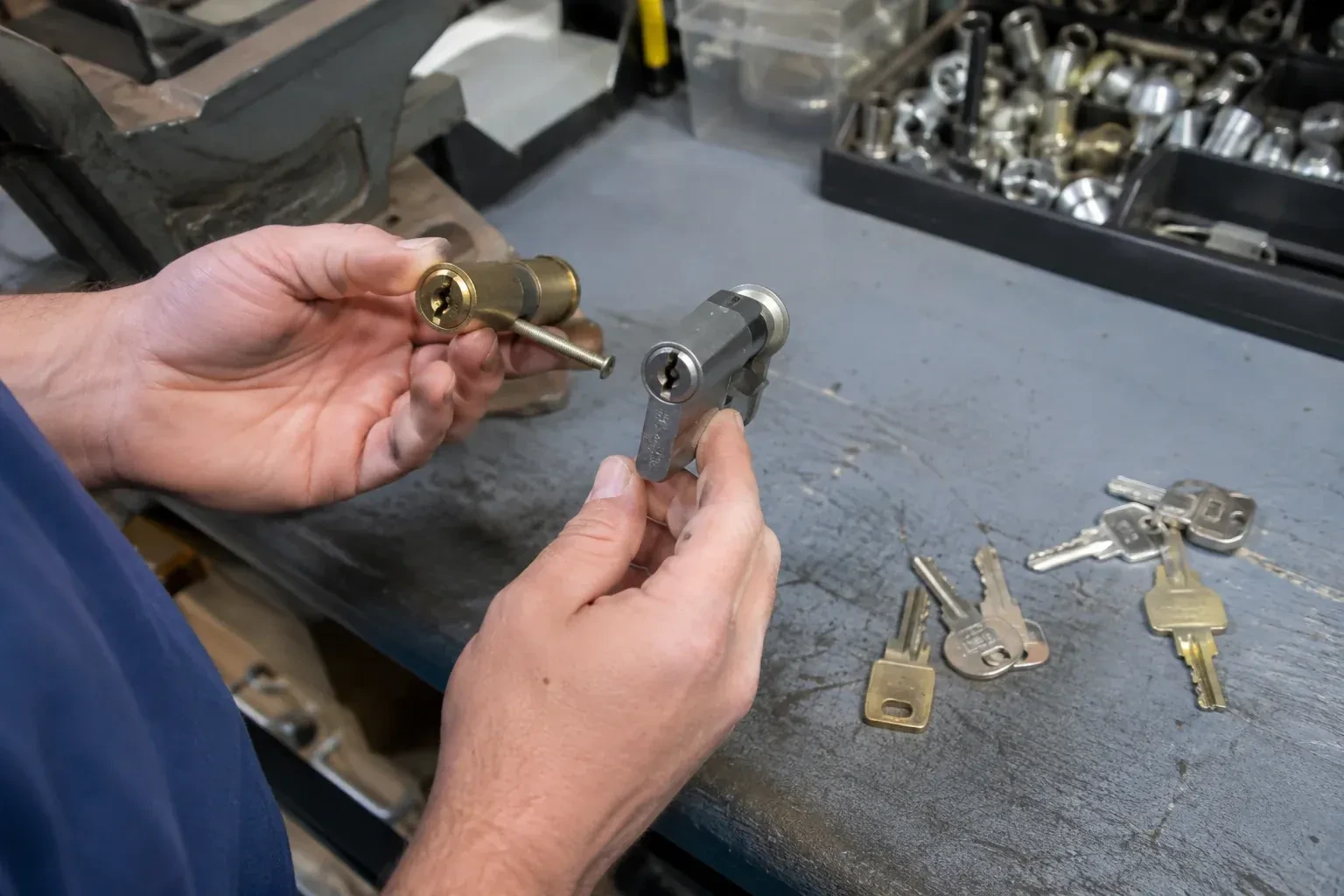
The bow and stub you are holding are worth a look before anything else. The cuts on it identify the key blank and give most of the bitting, so a replacement can be read straight from it and the fragment once they are side by side. Its condition tells a story too: thinning at the cuts, a slight bend, a crack line or a shiny worn tip all say the key was near the end of its life. The locksmith also asks about spares. A crisp spare, or the key code tag that came with the lock, is a better pattern for the new key than any worn copy.
- 2
Thawing first on a frozen lock
A cylinder that broke a key because it was frozen needs the ice dealt with before the fragment will move. The locksmith works lock de-icer into the keyway, or holds gentle heat near the cylinder, until the ice inside liquefies and the plug loosens. Boiling water from the kettle stays indoors: it refreezes inside the keyway and can split a cold cylinder. With the plug free and at rest, the extraction proceeds as normal. Afterwards the cylinder is dried thoroughly and given a water-repelling dry lubricant rather than one that traps moisture, so the same morning is far less likely to repeat.
- 3
Habits that keep keys in one piece
A few small changes stop most repeat breaks. Push the key fully home before turning, and turn from the bow with a level hand, never with pliers or from the tip. Keep the house key off box-cutting and ice-scraping duty; every bend fatigues the blade at its narrowest cut. Replace a key the moment it shows a kink, a crack line or rounded cuts, and cut the replacement from code or a crisp original. Keep the ring light. If the lock itself starts to stiffen, that is the cue to lubricate or call, because a stiff lock is the one that breaks keys.
In the van
- Vehicle key blades and chip shells
- Replacement cylinder or deadbolt
- Manufacturer-approved cylinder lubricant
- Key gauge and decoder
- Fine-jawed extractor pliers
What affects the quote
- 1
Drilling and a replacement cylinder
On the rare occasion a cylinder must be sacrificed, the price includes the new cylinder or complete deadbolt plus fitting it, and that is agreed with you before the drill is picked up.
- 2
Number of keys cut
Copies are counted individually. One replacement for a single occupant and four for a household are different lines, and you choose the number on the spot.
- 3
Whether the plug turned before the break
A key that snapped mid-turn leaves the plug rotated and the pins holding the fragment. Easing the plug back to rest before extraction is an extra step in the work.
Same fees day, night or weekend.
Broken Key Extraction: questions
Will the lock work again once the piece is out?
In most cases yes, and it is tested in front of you with a key that fits. The inspection after extraction is where the honest answer lives: if the pins, springs and cap are sound and the keyway is clean, the cylinder goes back into service with a fresh key. If wear or damage caused the break, that is explained and a rekey or new cylinder is offered as a separate choice.
My car key snapped in the door. Is that a locksmith job?
Yes. Vehicle door locks and ignitions use wafer cylinders that respond to the same extractor tools. Once the blade is out, the plastic head you are holding, which carries the transponder chip and any remote buttons, can usually take a freshly cut blade so the car keeps recognizing it. The ignition is checked as well, since a broken key sometimes disturbs the wafers.
Is a broken key a sign the whole lock is worn out?
Sometimes, and the visit answers it. A key that failed from its own fatigue in a clean, smooth cylinder says nothing against the lock. A key that broke because the pins were worn flat, the cap had loosened or the keyway was full of grit says the cylinder needs a service or a rekey. One that broke in a corroded, pitted plug is telling you the lock is due for replacement.
Lockout Services
 EmergencyHome Lockout ServiceSomeone pushed the privacy button on the bathroom door and pulled it shut behind them, leaving the room locked and empty.
 EmergencyBusiness Lockout ServiceAfter last night's power flicker the card reader beside the clinic door shows nothing.
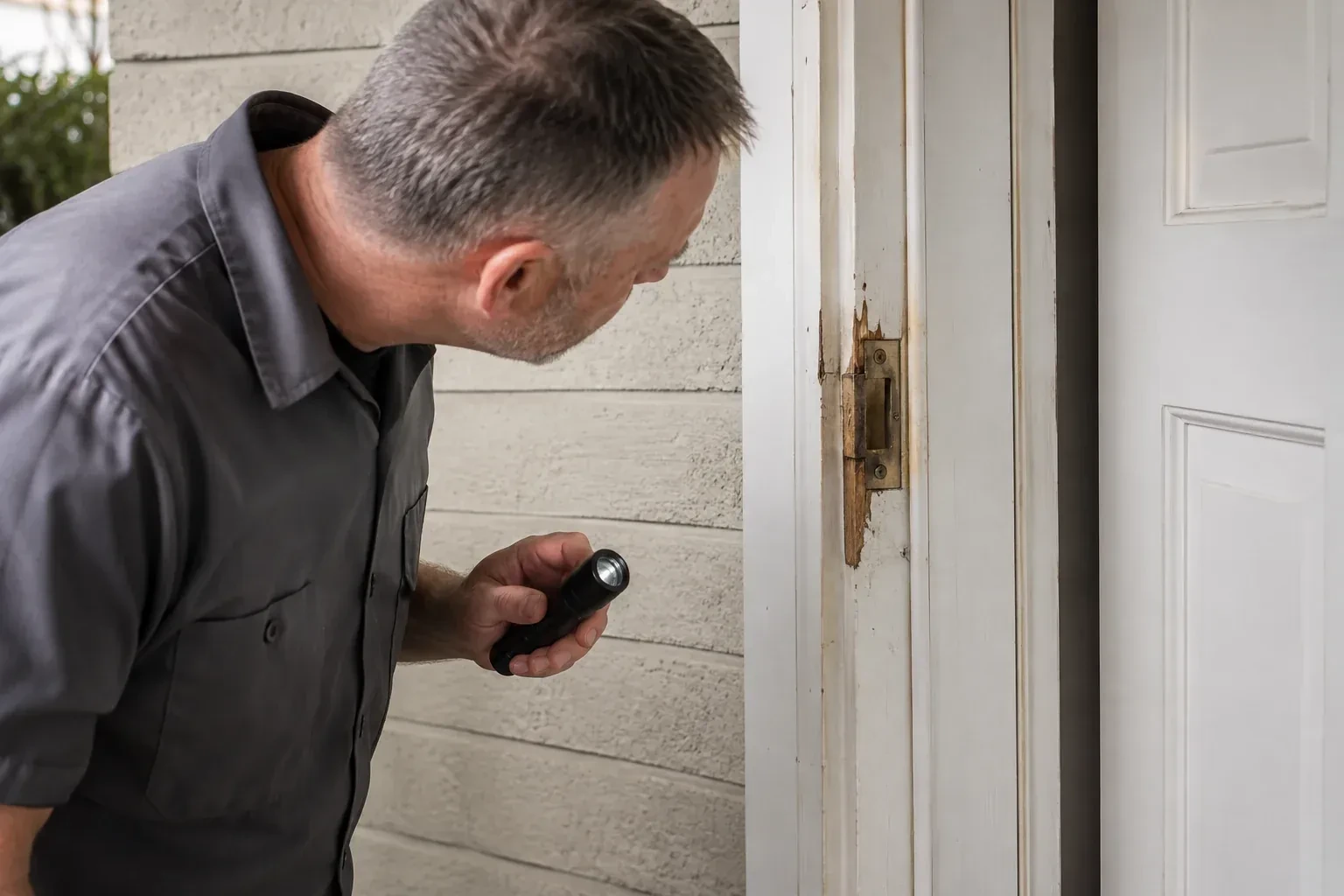 EmergencyBreak-In Damage Lock RepairPolice have come and gone, the occurrence number is on a sticky note, and you are standing in a cold hallway looking at a…
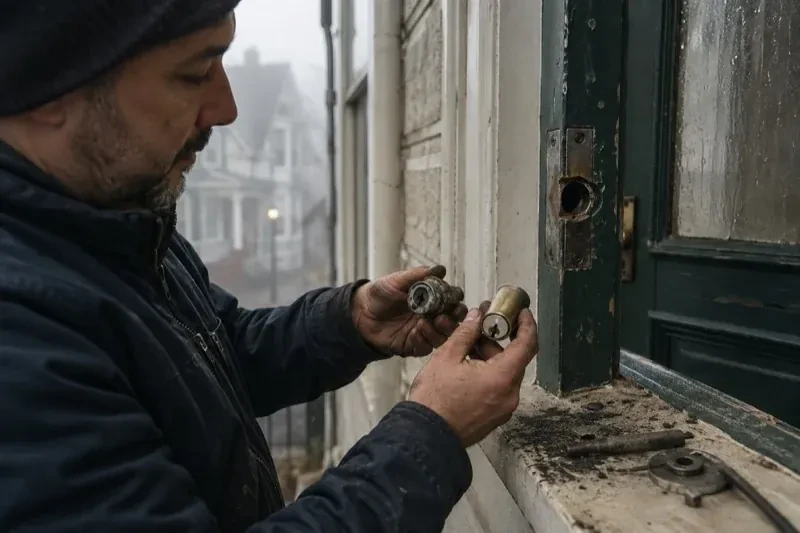 EmergencySeized & Jammed Lock OpeningThe shop's lever handle goes down as usual, but the latch inside the mortise case never pulls back.
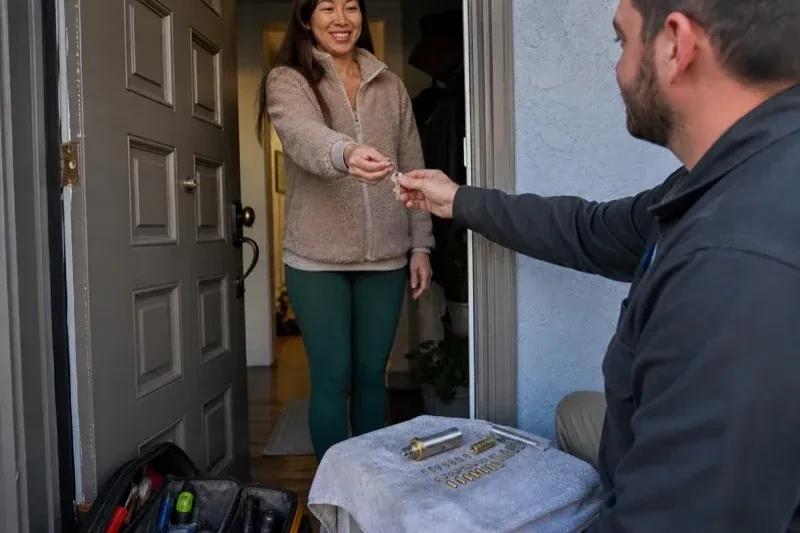 EmergencyLost Keys — Same-Visit RekeyYour purse was taken from the back of a chair at a restaurant.
Broken Key Extraction near you
Haldimand-Norfolk, Ontario
Norfolk County information
- Town
- Norfolk County, Haldimand-Norfolk, Ontario
- In business
- 22 years
- Hours
- Open 24/7 · nights, weekends and holidays, same fees
- Phone
- (226) 641-0178
- Visits
- On-site assessment preferred. Request a visit or call.
What the census means at the door
62%
Older homes. About 62% of homes in Norfolk County were built in 1980 or earlier, according to the 2021 Census.
Where most homes were built decades ago, doors often still carry their original mortise locks and brass knobs. That hardware can usually be cleaned, re-sprung and kept in service, with a modern deadbolt added above it for strength without losing the look.
83%
Mostly houses. Single-detached houses make up about 83% of homes in Norfolk County (2021 Census).
In areas of single houses, the door nobody watches is the side or back entry. It often has the weakest lock on the property. Fitting a proper deadbolt and a reinforced strike there is a modest job that closes the obvious gap.
Nearby
Open 24/7
Request a visit
The key went in like any other morning, you turned it, and something gave with a small metallic click.
Call now · open 24/7(226) 641-0178- On-site assessment preferred
- Same fees day, night or weekend
- 22 years in business