High security · Norfolk County
Safe Opening & Combination Change
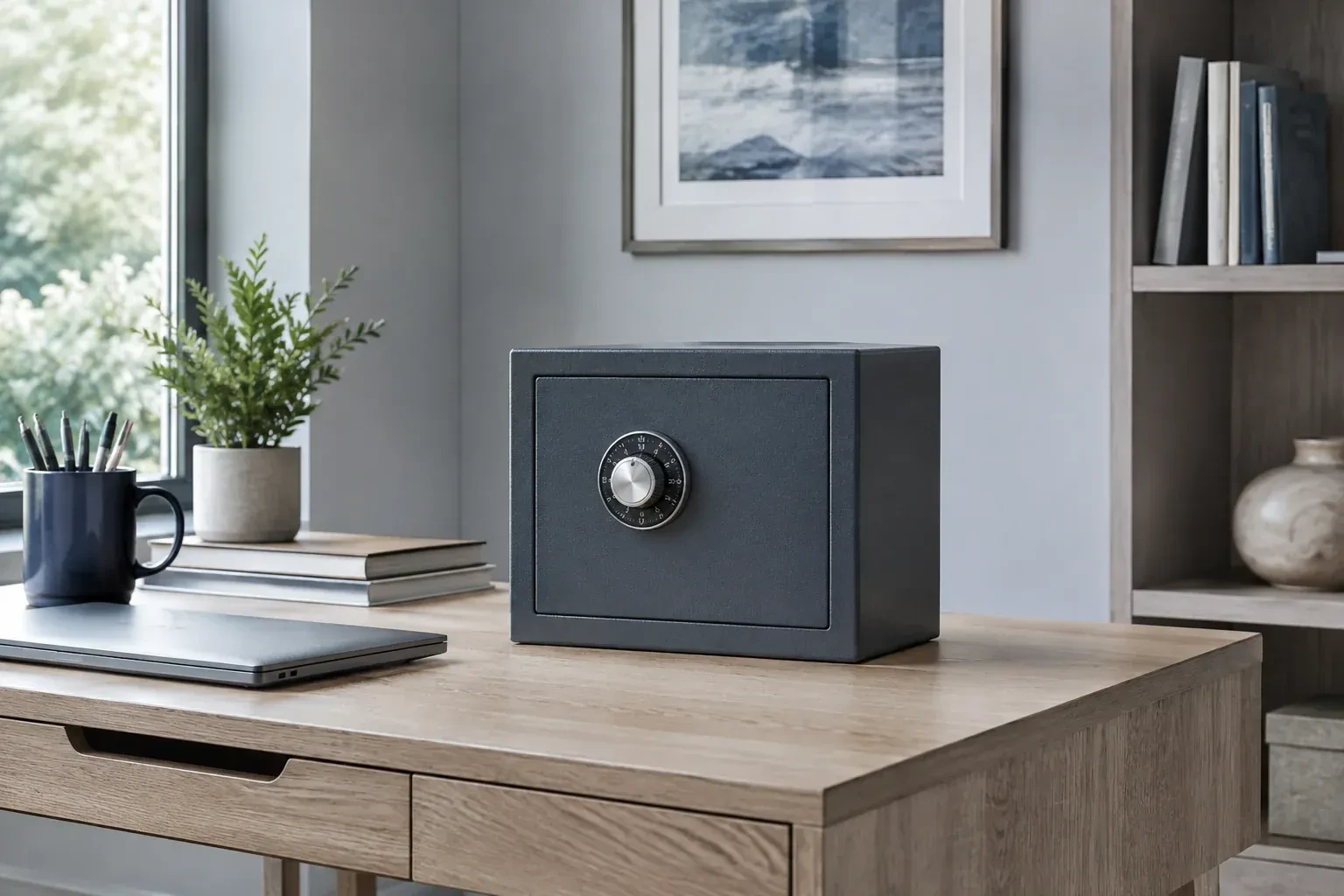
A safe sat in a late parent's basement for years, its combination known to nobody left in the family, and everyone would like to know what is actually inside it.
Call now · open 24/7(226) 641-0178In plain words
Two different problems can look identical from outside a locked safe: a combination that genuinely no longer opens it, and a mechanism that is jammed, corroded or blocked while the correct numbers still work perfectly. Sorting out which one is happening comes before any decision about drilling, since a stuck handle or a tripped relocker needs freeing rather than a fresh combination. Getting this diagnosis right the first time keeps the visit focused on the actual cause rather than the symptom in front of you.
How the visit goesThe new manager took over the shop last month and only now needs the back-office safe open, but the combination the previous owner was supposed to leave in writing never turned up anywhere in the handover file.
Safe Opening & Combination Change · Norfolk County
How the visit goes
- 1
Looking for a relocker or prior damage
Some safes include a relocker, a small device built to jam the bolt work until a trained technician services it, if the case is drilled in the wrong place, dropped, or exposed to fire. The locksmith looks for pry marks, drill attempts, scorching or a history of the safe being moved or dropped, since any of these can explain a lock that suddenly refuses a combination that worked yesterday. Recognizing a tripped relocker early changes the plan: the fix is mechanical, freeing or replacing the relocking mechanism, rather than another attempt at the original combination or a straightforward reset.
- 2
Setting and testing the new combination
With the safe open and the lock confirmed sound, a new combination or code is set, with the current owner choosing the numbers themselves within whatever range and spacing that lock's rules allow, rather than being handed a default. For a mechanical lock this means using a change key to reset the wheel pack to the new sequence; for an electronic lock it means entering the new code through the keypad or a connected programming tool. The new combination is then dialed or keyed in several times, with the door open and then closed, before the visit is considered finished, so any mistake surfaces on the spot rather than the next morning.
- 3
A combination that belongs to the current owner
Every old credential the lock supports, past user and manager codes, any super-master or recovery code, keys and external access, is checked and removed rather than just the one combination in daily use, so nobody still holding an old way in, a departed employee, a previous owner or otherwise, keeps one. The new sequence is chosen by the current owner or manager on the spot, not assigned from a list. This is worth treating deliberately rather than casually: deciding who genuinely needs the combination, and keeping that group as small as the business actually requires, is the simplest way to keep a fresh reset from becoming next year's same problem.
In the van
- Manufacturer reset tool
- Drill rig and carbide bits
- Spindle and drive cam
- Dial decoding instrument
- Manipulation and tension tools
What affects the quote
- 1
Distance to the safe's location
Travel time to the site is part of every call-out, and a location further from the locksmith's usual service area is reflected in the quote alongside the work itself.
- 2
Safe size and case construction
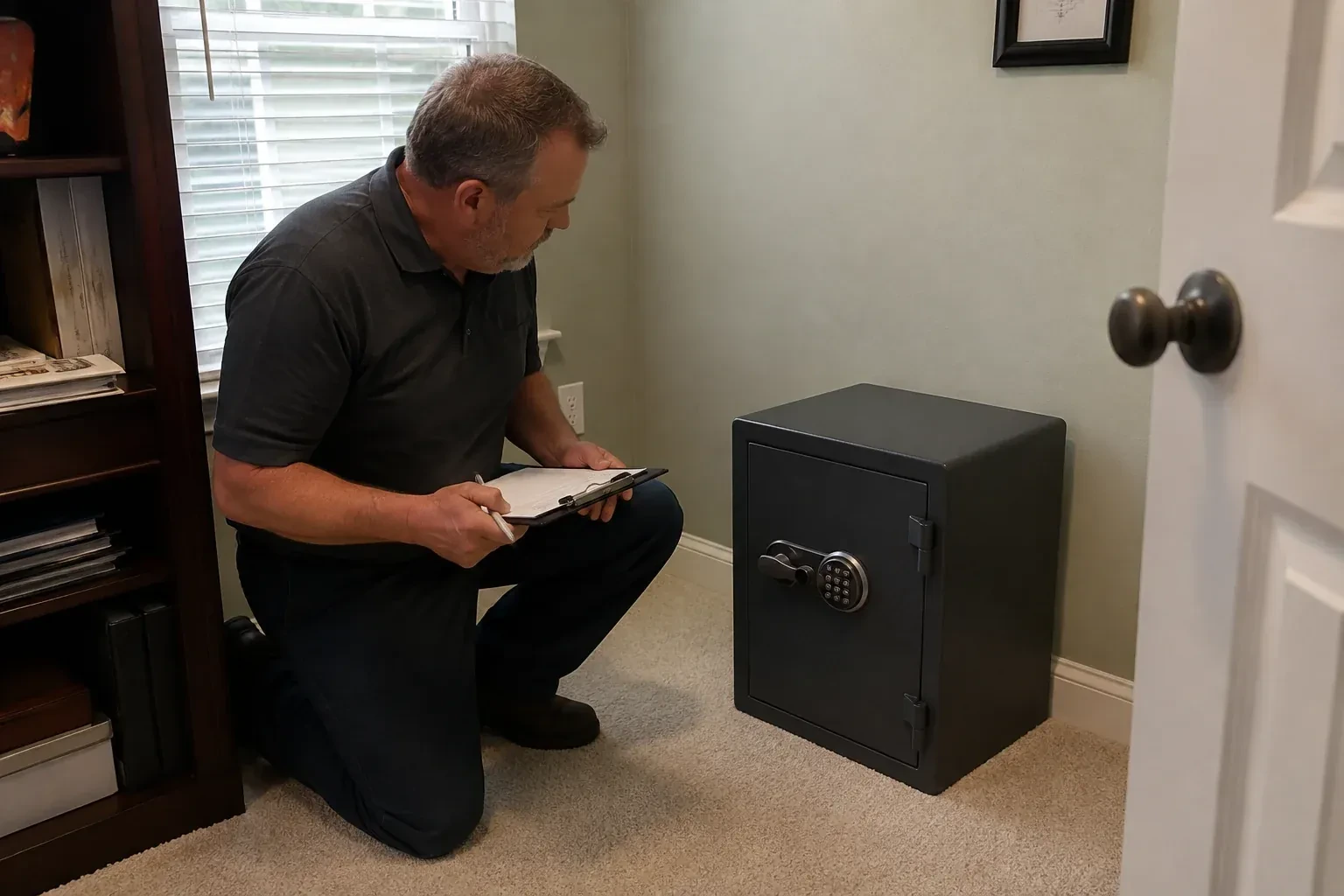
A compact drop safe with a thin body is generally quicker to assess than a large floor safe with a thick composite wall, and the tools involved differ accordingly.
- 3
Where the safe is located
A safe bolted to a floor, built into a wall, or set in a tight closet or basement corner takes more time to work around than one standing freely in an open room.
Same fees day, night or weekend.
Safe Opening & Combination Change: questions
Can a safe be repaired instead of replaced after drilling?
Often, yes, particularly for a mechanical lock, where a worn wheel pack, drive cam or spindle can be replaced individually within the existing lock body. An electronic lock's circuit board and keypad are less often repairable in place and are more commonly swapped for a comparable or higher-rated replacement unit that fits the same cutout.
How often should a safe combination be changed?
There is no fixed schedule; the sensible trigger is a change in who knows it, such as an employee or manager leaving, rather than a set number of months or years. A combination that has only ever been known to current staff generally does not need changing on a routine basis, since the lock itself does not wear out from correct use the way a mechanical part might.
Can a mechanical dial safe be opened without drilling it?
Most of the time, yes. Manipulation reads the wheel pack through the dial by feel, and decoding tools built for a specific lock family read the gate positions directly, both without any lasting effect on the lock. Whether either works depends on the lock's own security rating and condition, since a high-security Group 1 lock resists these methods far longer than an older Group 2 one, but drilling is only used once both routes are ruled out.
High Security Locks
Safe Opening & Combination Change near you
Haldimand-Norfolk, Ontario
Norfolk County information
- Town
- Norfolk County, Haldimand-Norfolk, Ontario
- In business
- 22 years
- Hours
- Open 24/7 · nights, weekends and holidays, same fees
- Phone
- (226) 641-0178
- Visits
- On-site assessment preferred. Request a visit or call.
What the census means at the door
62%
Older homes. About 62% of homes in Norfolk County were built in 1980 or earlier, according to the 2021 Census.
Where most homes were built decades ago, doors often still carry their original mortise locks and brass knobs. That hardware can usually be cleaned, re-sprung and kept in service, with a modern deadbolt added above it for strength without losing the look.
83%
Mostly houses. Single-detached houses make up about 83% of homes in Norfolk County (2021 Census).
In areas of single houses, the door nobody watches is the side or back entry. It often has the weakest lock on the property. Fitting a proper deadbolt and a reinforced strike there is a modest job that closes the obvious gap.
Nearby
Open 24/7
Request a visit
A safe sat in a late parent's basement for years, its combination known to nobody left in the family, and everyone would like to know what is actually inside it.
Call now · open 24/7(226) 641-0178- On-site assessment preferred
- Same fees day, night or weekend
- 22 years in business